Abdul-Salam Bilal: The Story of Nicolas Anelka
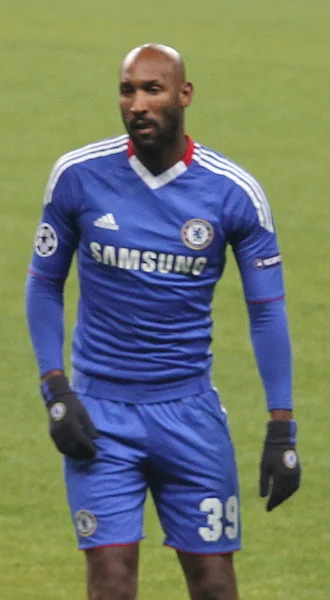
Nicolas Anelka
25 years old, from France
Previous Religion: Christianity
My Life Before Islam
Nicolas Anelka was born on 14 March 1979 in Le Chesnay, near Paris, into a family that had moved from the island of Martinique in 1974. He grew up in the working-class suburb of Trappes, where he played football from a young age alongside friends from Algerian, Moroccan, and Tunisian families. His talent was evident early, and by sixteen he had joined the youth academy of Paris Saint-Germain. Around him, he later recalled, his childhood friends lived by principles of honesty, discipline, and faith that struck him as both beautiful and true. Their example of fasting during Ramadan and praying daily impressed him deeply, and he felt drawn to a way of life he already sensed within himself.
The Moment of Guidance
Anelka has said that his heart turned to Islam when he was sixteen, shaped by the close friends he grew up with in the Paris suburbs. "I was sixteen when I converted to Islam," he later told an interviewer. Long before his public declaration, he would fast in Ramadan because he admired the people fasting around him, and he sought to live by values of righteousness and restraint that he felt were already his own. His rise in football, from Paris Saint-Germain to Arsenal, Real Madrid, and Chelsea, made him one of the most celebrated strikers of his generation, yet he has said that his faith kept him calm and focused amid the temptations of fame.
Reflections
Anelka made his formal conversion public in 2004 in the United Arab Emirates, where he embraced Islam before two muftis at the Al Wasl mosque, reading verses of the Qur'an and taking the Muslim name Abdul-Salam Bilal. He has often said that the decision did not change his life because he was already living by its principles, but that Islam gave his convictions a home and deepened his sense of purpose. His story is a reminder that for some, conversion is not a sudden reversal but the public confirmation of a truth long felt in the heart.
Anelka continued to play at the highest level for West Bromwich Albion and several other clubs, though his career was not without controversy. In December 2013 he made headlines with a gesture he later said was misunderstood, and he always defended his right to practice his faith openly. Professionally he kept the name Anelka, yet within the Muslim community he remains known as Abdul-Salam Bilal. His life as a convert, from the streets of Trappes to the great stadiums of Europe, shows a man who carried the faith of his boyhood friends into the center of the world's game and who speaks of Islam with quiet dignity.